Where Is My Fear?
The Fear of the Lord · Month 1 of 12
A son honoureth his father, and a servant his master: if then I be a father, where is mine honour? and if I be a master, where is my fear? saith the LORD of hosts.
— Malachi 1:6
Pass the time of your sojourning here in fear.
— 1 Peter 1:17
This is the first of twelve. Once a month for the next year I’m going to work through one question: what does it actually mean to fear God? Not the soft version. Not the version that has been sanded down until it means “be a bit respectful in church.” The one that’s in the Book.
I’m writing this for me first. You’re welcome to come along, and I hope you will, but I need this year more than I need you to read it.
Here’s why. I don’t think we’re serious about God. Not that we don’t love Him. We sing, we pray, we read, some of us preach. But it’s very easy, without noticing, to turn Him around so that He serves us.
Look at how we pray. Most of our prayers are an order sheet. Look at how we leave church. We judge the service by whether it did something for us, the way we’d review a restaurant. When life goes well, God is good. When it doesn’t, we feel He’s let us down, like a contractor who missed a deadline.
We’d never say it out loud. We’d be horrified if someone said it about us. But the way we live says it for us.
A Question Nobody Saw Coming
Malachi is the last voice in the Old Testament. After him, heaven goes quiet for about four hundred years, until John the Baptist walks out of the wilderness. So whatever God says through Malachi is the last thing He says for a very long time.
And who does He say it to? Not the pagan nations. Not the obvious sinners. He says it to the priests. “O priests, that despise my name.” The men who handled holy things every day.
And they answer Him: “Wherein have we despised thy name?”
They genuinely didn’t know. That’s the frightening part. They weren’t rebels shaking their fists. They were busy, religious, worn-out men doing their jobs, and they had no idea anything was wrong.
That’s what self-righteousness does. From the inside it doesn’t feel like pride. It feels like having done your job. The priests looked at their own record, found it good enough, and couldn’t see what God saw.
That word “wherein” comes up again and again through the book. “Wherein hast thou loved us?” (1:2). “Wherein have we polluted thee?” (1:7). “Wherein have we wearied him?” (2:17). “Wherein shall we return?” (3:7). “Wherein have we robbed thee?” (3:8). Every time God puts His finger on something, they ask, “What are You talking about?”
So stop here for a moment.
Have you ever asked God “wherein”?
Not as a figure of speech. Actually asked Him, and waited for the answer?
If you never have, this year is for you. It’s certainly for me.
The Weight They Took Away
Look closely at what God asks for. A father gets honour. A master gets fear.
The Hebrew word for honour is kavod. Its root, kabed, means heavy. To honour someone is to give them weight, to let them matter. So when God asks, “where is mine honour?” He’s really asking something else.
“Where is My weight? Why am I so light to you?”
Read it again, slowly, as if He were asking you.
The word for fear is mora, from yare, the same family as “The fear of the LORD is the beginning of knowledge” (Proverbs 1:7). It’s a big word. It can mean awe, reverence, honour, and yes, being afraid. The Old Testament doesn’t pick one and throw away the others. That’s the word we’ll take apart in January.
For now, just notice that God claims both. He’s a Father, so He should be honoured. He’s a Master, so He should be feared. We’ve kept the Father and quietly retired the Master. Malachi says you don’t get to choose.
What It Looked Like
So what were the priests actually doing? God tells them.
“Ye offer polluted bread upon mine altar” (1:7). “And if ye offer the blind for sacrifice, is it not evil? and if ye offer the lame and sick, is it not evil? offer it now unto thy governor; will he be pleased with thee, or accept thy person?” (1:8).
The law said bring your best. They were bringing the animals nobody wanted, the blind one, the lame one, the sick one. The ones that were going to die anyway.
I’ve thrown enough undersized fish back into the surf to know the difference between the fish you keep and the fish you throw back. Israel was giving God the ones they’d have thrown back.
God’s challenge is almost funny: try giving that to the governor. Try handing your boss a report you knocked out in five minutes on the way to the meeting and see how it goes. We’d never do it to a person who mattered to us. We do it to God all the time.
Then verse 13: “Ye said also, Behold, what a weariness is it! and ye have snuffed at it.” They sighed at it. They sniffed at it. Worship had become a chore.
So what does that look like now? None of us are sacrificing goats.
It’s prayer squeezed in after the phone has had the first hour of the day. It’s giving what’s left after the bills and the holiday fund. It’s Bible reading that we tick off. It’s walking into church already tired of it, and walking out with a review. It’s the nudge from the Holy Spirit that we file under “later” because we’re busy. None of it is wicked. That’s the point. Malachi’s priests weren’t wicked either. They were tired, and they gave God their leftovers, and He called it despising His name.
Didn’t He Come to Serve Us?
Someone will push back here, and they’d be right to. Didn’t Jesus say “the Son of man came not to be ministered unto, but to minister” (Mark 10:45)? Didn’t He kneel down and wash feet?
Yes. He did. And it’s the most beautiful thing in the world.
But watch what He says when He gets up off the floor. “Ye call me Master and Lord: and ye say well; for so I am” (John 13:13).
His humility was never a demotion. When the King kneels to wash your feet, He doesn’t become your servant to order around. He’s still the King. He has just shown you what kind of King He is. And the lower He stoops, the more fear He’s due, not less. We’ll come back to that later in the year, because the Bible says something astonishing about it: “there is forgiveness with thee, that thou mayest be feared” (Psalm 130:4). Grace doesn’t cancel the fear of the Lord. Grace is what produces it.
People Passing Through
Now go back to Peter. “And if ye call on the Father, who without respect of persons judgeth according to every man’s work, pass the time of your sojourning here in fear” (1 Peter 1:17).
Did you see it? Father and Judge in the same breath. It’s exactly Malachi’s father and master. Peter, writing to Christians, doesn’t pick one either.
The word for “sojourning” is paroikia. It means living somewhere as a resident alien, someone who stays but doesn’t own the place. Peter is saying, “You’re passing through. This isn’t your house. Live like a guest in it.”
I think that’s where we’ve gone wrong. We’ve moved in. We’ve put our name on the letterbox. We’ve started treating this life as the main thing and God as the One who helps it go well. Peter says to live the other way round. And the reason he gives, in the very next verses, is the price that was paid for us. We’ll get there.
The Ones God Wrote Down
I don’t want to leave you with only the hard part, because Malachi doesn’t.
In the middle of all the “wherein” and the lame sheep, there was a small group who got it right. “Then they that feared the LORD spake often one to another: and the LORD hearkened, and heard it, and a book of remembrance was written before him for them that feared the LORD, and that thought upon his name” (Malachi 3:16).
God was listening to their conversations. And He wrote their names down.
Then the next verse: “And they shall be mine, saith the LORD of hosts, in that day when I make up my jewels; and I will spare them, as a man spareth his own son that serveth him” (3:17).
Hear this part, whoever you are. The fear of the Lord isn’t the posture of the people God is angry with. In Malachi it’s the posture of the people He calls His jewels. It’s the people whose names He writes down. It’s sons, not suspects.
That’s where this year is going. Not toward feeling worse. Toward taking Him seriously, and finding out He’s worth it.
For This Month
This is meant to be lived, not just read. So here’s what I’m going to do this month, and I’d love you to do it with me.
Ask Malachi’s question. Each night before sleep, ask honestly, “Lord, wherein?” Where did I treat You lightly today? Don’t make a list of every failure. Ask Him to show you one thing, and write it down. One. By the end of the month you’ll have a page that tells you the truth.
Give Him the first, not the leftovers. Pick one thing that is genuinely first. The first ten minutes of the day before the phone. The first portion of what comes in, before the bills decide what’s left. The first thought when the nudge comes, instead of “later.” Just one.
Read Malachi. It’s only four chapters. Read it once a week this month, start to finish.
And so there’s something fresh each week, here’s one verse to carry with you for each week of the month, and one small thing to do with it.
Week one. Meditate on “if then I be a father, where is mine honour? and if I be a master, where is my fear?” (Malachi 1:6). Read it each morning as if He were asking you. Then ask yourself which one you’ve kept, the Father or the Master.
Week two. Meditate on “offer it now unto thy governor; will he be pleased with thee” (Malachi 1:8). Find one blind or lame offering in your week, and give Him your best in that place instead.
Week three. Meditate on “Ye call me Master and Lord: and ye say well; for so I am” (John 13:13). Once a day, call Him Master and Lord in prayer, and mean it. Notice what changes when you do.
Week four. Meditate on “Then they that feared the LORD spake often one to another” (Malachi 3:16). Have one real conversation with another believer about what God has shown you this month. Then read your “wherein” page back to Him.
Going Deeper
If you’re doing this with a group, or on your own with a notebook, here are some questions to work through slowly.
- Malachi’s priests didn’t know they were despising God’s name. Why do you think it’s so hard to see this in ourselves?
- God claims to be both Father and Master (1:6). Which one do you find easier to relate to, and why?
- Look at the “wherein” questions through the book (1:2, 1:6, 1:7, 2:17, 3:7, 3:8). Which one sounds most like you?
- What would a “blind or lame” offering look like in your week? Be specific.
- Jesus washed feet and still said, “so I am” (John 13:13). How does His humility make Him more worthy of fear, not less?
- Read Malachi 3:16–17. What did the people who feared the Lord actually do? What does God do in return?
A Prayer
Father, You asked Your priests where Your fear was, and they didn’t know what You meant. I don’t want to be them. I’ve given You my leftovers and called it worship. I’ve treated You as light when You are the heaviest thing there is. I’ve wanted a Father without a Master. Forgive me. Show me, one day at a time, wherein. Give me a heart that takes You seriously, not out of terror, but because You are worth it. And write my name in Your book of remembrance with the ones who thought upon Your name. In Jesus’ name, amen.
“What comes into our minds when we think about God is the most important thing about us.”
– A. W. Tozer, The Knowledge of the Holy
“’Course he isn’t safe. But he’s good. He’s the King, I tell you.”
– C. S. Lewis, The Lion, the Witch and the Wardrobe
i-CH always
Next month: falling as dead. What happened to Isaiah in the temple, and to John on Patmos, when they actually saw Him.
The books
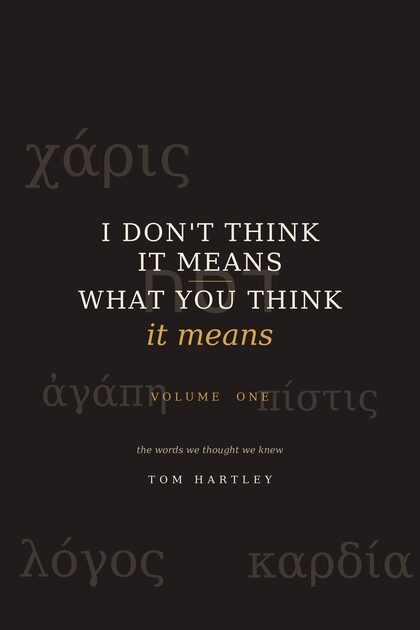
I Don’t Think It Means What You Think It Means
Volume One · The words we thought we knew
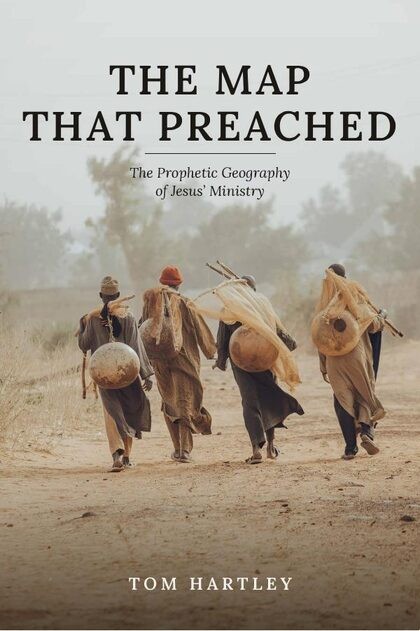
Ordering in New Zealand? Buy from the shop