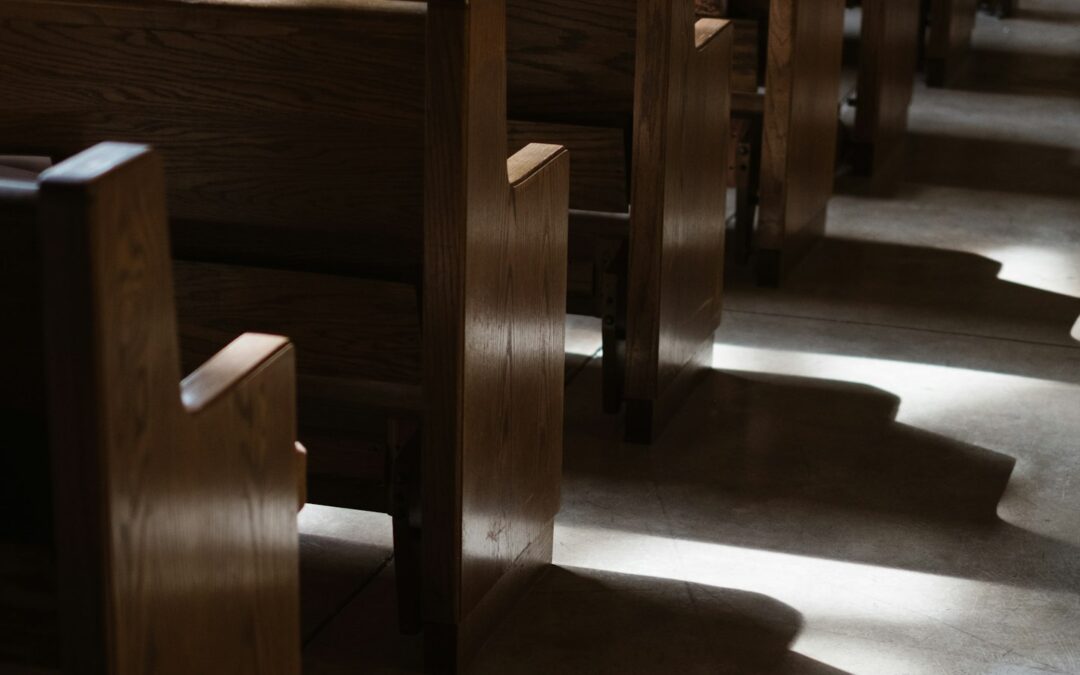
Two Hours Is Enough
Our righteousness, His righteousness, and the fear of the Lord
The transgression of the wicked saith within my heart, that there is no fear of God before his eyes. For he flattereth himself in his own eyes.
— Psalm 36:1–2
For they being ignorant of God’s righteousness, and going about to establish their own righteousness, have not submitted themselves unto the righteousness of God.
— Romans 10:3
We have Sunday down pat.
Up at seven. Coffee, a look at the news and the emails. Check what’s on for the afternoon. Shower, dress, out the door, and at church fifteen minutes early, so there’s time to chat with friends and find our seats before the service starts.
And the service has its timing too. An hour of music. Fifteen minutes for the announcements and the offering. Thirty minutes of preaching. Fifteen more minutes of music to leave by. Two hours, give or take, and then lunch.
None of that is wrong. Singing to God is in the Book. So is giving, and so is preaching, and so is gathering together. We love a great Sunday morning.
The trouble isn’t the pattern. It’s the voice that comes with it. The quiet one that says, “There. That’s done. I’ve given God His two hours.” And then Monday belongs to us.
That voice has a name. It’s self-righteousness. And I’ve come to think it’s one of the main reasons we’ve lost the fear of the Lord.
He Flattereth Himself
Psalm 36 opens with a strange sentence. David says the wicked man’s sin speaks to him, deep inside, “that there is no fear of God before his eyes.”
Then he tells us why. “For he flattereth himself in his own eyes.”
Look where the eyes are pointing. There’s no fear of God before his eyes because his eyes are already full. Full of himself. He’s looking at his own record, and he likes what he sees.
Paul quotes the first half of that verse in Romans 3, at the end of a long list. “There is none righteous, no, not one” (3:10). Then the list goes on through the throat, the tongue, the lips and the feet, and it finishes here: “There is no fear of God before their eyes” (3:18). That’s the bottom of the list. Everything else grows out of it.
Proverbs puts the two side by side as a choice. “Be not wise in thine own eyes: fear the LORD, and depart from evil” (Proverbs 3:7). You can be big in your own eyes, or you can fear the Lord. Not both. There isn’t room.
The more I admire my own righteousness,
the less room there is in my eyes for His.
Two Men in the Temple
Jesus told a story about this, and Luke tells us exactly who it was for. “And he spake this parable unto certain which trusted in themselves that they were righteous, and despised others” (Luke 18:9).
Two men go up to the temple to pray. One is a Pharisee. One is a tax collector, the kind of man everyone in town crossed the street to avoid.
The Pharisee stands up and prays, and Luke says he “prayed thus with himself”. Even his prayer is pointed at himself. “God, I thank thee, that I am not as other men are… I fast twice in the week, I give tithes of all that I possess” (18:11–12).
Notice what he brings to God. His schedule. Two fasts a week. A tenth of everything. He was a very regular man. He had his week down pat, and he kept to it better than most of us keep to ours.
Then the other man. “And the publican, standing afar off, would not lift up so much as his eyes unto heaven, but smote upon his breast, saying, God be merciful to me a sinner” (18:13).
He had nothing on his list. So he had nowhere to look but at God, and he couldn’t even lift his eyes to do that.
And Jesus says, “I tell you, this man went down to his house justified rather than the other” (18:14).
The Pharisee went home with his record. The tax collector went home righteous. Not with his own righteousness. He didn’t have any. With God’s.
Their Fear Is Taught by the Precept of Men
Isaiah has a line about this. “This people draw near me with their mouth, and with their lips do honour me, but have removed their heart far from me, and their fear toward me is taught by the precept of men” (Isaiah 29:13).
Their fear toward Him was taught by the precept of men. Their reverence had become a routine somebody else had set up for them. They knew when to stand, when to sing and when to be quiet. They had the form of fearing God, and none of the fear.
Jesus quoted that verse to the Pharisees in Matthew 15. “This people draweth nigh unto me with their mouth, and honoureth me with their lips; but their heart is far from me. But in vain they do worship me” (Matthew 15:8–9).
Amos goes further, and it’s uncomfortable reading for anyone who loves a good worship set. God says to Israel, “I hate, I despise your feast days, and I will not smell in your solemn assemblies… Take thou away from me the noise of thy songs; for I will not hear the melody of thy viols” (Amos 5:21, 23).
They were singing. They were turning up. And God called it noise.
Why? The very next verse. “But let judgment run down as waters, and righteousness as a mighty stream” (5:24). Their songs were fine on Sunday, but nothing was flowing the rest of the week. There was no river. Just a pond they visited once a week.
Going About to Establish
Now Paul’s sentence from the top. “For they being ignorant of God’s righteousness, and going about to establish their own righteousness, have not submitted themselves unto the righteousness of God” (Romans 10:3).
“Going about to establish.” It’s the language of building. Putting up something of our own and standing on it. And Paul says that people busy building their own righteousness “have not submitted themselves” to God’s.
That’s the link to fear. You can’t fear Someone you’re busy impressing. Self-righteousness doesn’t stand in front of God with its hand over its mouth. It stands in front of Him with a clipboard.
Isaiah tells us what the clipboard is worth. “But we are all as an unclean thing, and all our righteousnesses are as filthy rags” (Isaiah 64:6). Notice he says righteousnesses, plural. Not our sins. Our good deeds. The best of what we bring, held up next to Him, looks like rags.
And this isn’t only a trap for Pharisees. Think about Job. The Bible says he was “perfect and upright, and one that feared God” (Job 1:1). If anyone feared the Lord, Job did. But as the book goes on, his suffering slowly turns into a defence of himself. By chapter 32, Elihu is angry with him “because he justified himself rather than God” (Job 32:2).
A man who feared God slid, a little at a time, into defending his own righteousness. It can happen to the best of us. It usually happens to the best of us.
And what brought him back? Not an argument. God showed up. “I have heard of thee by the hearing of the ear: but now mine eye seeth thee. Wherefore I abhor myself, and repent in dust and ashes” (Job 42:5–6).
His eyes moved off himself and onto God, and the fear came back.
Self-righteousness doesn’t stop us going to church.
It stops us trembling when we get there.
What They Did With the Rest of the Week
Now look at the church at the very beginning, in Acts 2.
“And they continued stedfastly in the apostles’ doctrine and fellowship, and in breaking of bread, and in prayers. And fear came upon every soul” (Acts 2:42–43).
And then: “And they, continuing daily with one accord in the temple, and breaking bread from house to house, did eat their meat with gladness and singleness of heart, Praising God” (2:46–47).
Daily. Not weekly. In the temple and in each other’s kitchens. And Luke puts the fear right in the middle of it. “Fear came upon every soul.” The fear of the Lord wasn’t something they visited on the Sabbath. It was the air they breathed all week.
Paul says the same thing to the Romans. “I beseech you therefore, brethren, by the mercies of God, that ye present your bodies a living sacrifice, holy, acceptable unto God, which is your reasonable service” (Romans 12:1).
The whole body. The whole week. Monday’s emails and Wednesday’s argument and Friday’s bank account. That’s the service. Two hours on Sunday was never the sacrifice. It was meant to be the overflow.
His Righteousness, Not Ours
So what’s the answer? Try harder? Add a third hour? Pray longer so we feel better about ourselves?
That would just be a bigger clipboard.
Paul, who had the best religious record of anyone, says he threw it all away to “be found in him, not having mine own righteousness, which is of the law, but that which is through the faith of Christ, the righteousness which is of God by faith” (Philippians 3:9).
Jeremiah gave the Messiah a name: “THE LORD OUR RIGHTEOUSNESS” (Jeremiah 23:6). Not the Lord who helps us with our righteousness. The Lord who is it.
The fear of the Lord comes back when we stop looking at our own record and start looking at His. When I see how holy He is, my best Sunday looks like rags. And when I see what He did with my rags, I can’t treat Him lightly ever again.
I wrote a whole series on these two rivers, the one that flows from God and the one we dig for ourselves. It’s called The Power of Righteousness, if you’d like to go further. And on the first of November I’m starting a year-long series on the fear of the Lord. You’ll see this thread run right through it.
So, Is Two Hours Enough?
It’s the wrong question. That’s the trouble with it.
Two hours, three hours, the whole of Sunday, it’s still us holding the clipboard and deciding when God has had His share. The tax collector didn’t go home thinking about how long he’d prayed. He went home thinking about how merciful God had been.
Look at the way Jesus puts it. “This man went down to his house justified.” Down to his house. Out of the temple and back into his week, carrying a righteousness that wasn’t his. It went home with him. It sat at his table on Monday.
That’s what Sunday was always meant to be. Not the part of the week we give to God, but the place we’re reminded that all of it is His, and that the only righteousness we’ve got is the one He gave us.
When I walk out of church, what am I carrying home?
My own record, or His righteousness?
If it’s my record, I’ll feel fine, and I won’t fear Him much at all. If it’s His righteousness, I’ll know exactly what it cost, and I’ll never treat Him lightly again.
For This Week
Meditate on this. Pray it each morning before you do anything else, and add nothing to it.
“God be merciful to me a sinner”
Luke 18:13 (KJV)
Consider. Where am I measuring myself by the hours I give God, instead of resting on His righteousness?
One step. Each time you catch yourself comparing your devotion with someone else’s, stop and pray the tax collector’s prayer instead.
A Prayer
Father, I’ve flattered myself in my own eyes. I’ve brought You my schedule and called it devotion. I’ve given You two hours and kept the rest of the week for me. Forgive me. I don’t want to go home with my own record like the Pharisee did. Take my eyes off myself and fix them on You, the way You did for Job. Thank You that Jesus is my righteousness, because I don’t have any of my own. Give me back the fear of the Lord, not just on Sunday, but on Monday and every day after. Let Your righteousness run through my life like a mighty stream. In Jesus’ name, amen.
“Ever since man became a sinner he has been self-righteous.”
– C. H. Spurgeon, A Blow at Self-Righteousness (Sermon 350)
“As long as you are looking down, you cannot see something that is above you.”
– C. S. Lewis, Mere Christianity
i-CH always
The books
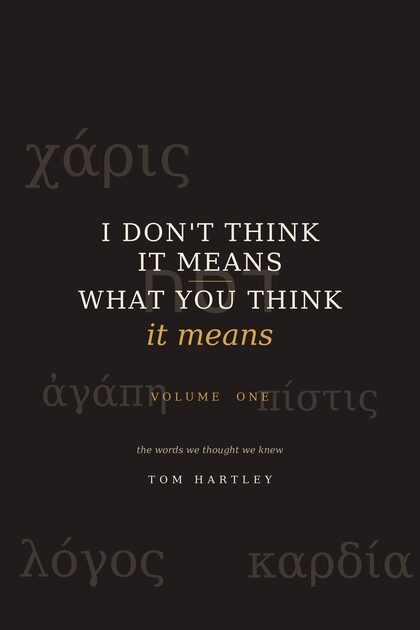
I Don’t Think It Means What You Think It Means
Volume One · The words we thought we knew
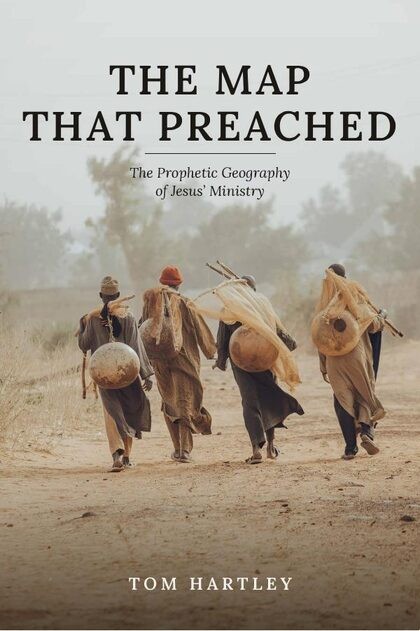
Ordering in New Zealand? Buy from the shop