When Eyes Lift Up
Abraham gave Lot first choice of the land, and Lot chose with his eyes. He was a righteous man, and it cost him almost everything.
“And Lot lifted up his eyes, and beheld all the plain of Jordan, that it was well watered every where, before the LORD destroyed Sodom and Gomorrah, even as the garden of the LORD, like the land of Egypt.”
— Genesis 13:10 (KJV)
“And the LORD said unto Abram, after that Lot was separated from him, Lift up now thine eyes, and look from the place where thou art.”
— Genesis 13:14 (KJV)
Abraham and Lot had a problem most families would envy. They had too much. “The land was not able to bear them, that they might dwell together: for their substance was great” (Genesis 13:6). Their herdmen were fighting over grass and water, and something had to give.
So Abraham, the older man, the one God had made the promise to, did something remarkable. He gave Lot first pick. “Is not the whole land before thee? separate thyself, I pray thee, from me: if thou wilt take the left hand, then I will go to the right; or if thou depart to the right hand, then I will go to the left” (13:9).
Abraham had every right to choose first. The land had been promised to him, not to Lot. And it’s worth noticing where Lot’s wealth came from in the first place. “And Lot also, which went with Abram, had flocks, and herds, and tents” (13:5). Lot was rich because he had been walking beside the man God was blessing. Abraham could have reminded him of that. He didn’t. He opened his hands and let the younger man choose.
What Lot did next is one of the clearest pictures in the Bible of choosing with your eyes.
He Lifted Up His Eyes
There’s nothing wrong with looking. Lot had to look somewhere. But listen to what Moses compares the view to. “Even as the garden of the LORD, like the land of Egypt.”
The garden of the LORD is Eden. And we know what happened the last time someone stood in Eden and looked. “And when the woman saw that the tree was good for food, and that it was pleasant to the eyes” (Genesis 3:6).
Egypt is the other comparison, and it matters just as much. Abraham and Lot had only just come back from there. In chapter 12 there was a famine, they went down to Egypt, Abraham lied about Sarah, and they came out with sheep and oxen and servants (12:16). Lot had seen what Egypt could give a man. Now he stood on a hill in Canaan and saw it AGAIN, and he wanted it.
Then verse 11. “Then Lot chose him all the plain of Jordan.” He chose it for himself. There’s no prayer in the story, no altar, no asking. He looked, he liked it, and he took it.
John gave us the three things that are “of the world”: “the lust of the flesh, and the lust of the eyes, and the pride of life” (1 John 2:16). Lot’s choice sits squarely in the middle one. But notice that it didn’t look like sin. It looked like good sense. Water, grazing, room for the herds. Any farmer would have done the same. That’s exactly what makes it dangerous.
The lust of the eyes rarely looks like sin.
It usually looks like a sensible decision.
What Moses Put Next to It
Moses doesn’t stop the story to comment on Lot’s choice. He doesn’t need to. He just puts two sentences side by side. “Lot dwelled in the cities of the plain, and pitched his tent toward Sodom. But the men of Sodom were wicked and sinners before the LORD exceedingly” (13:12–13).
Lot saw the water. He didn’t see the people, or if he did, he didn’t weigh them. The eyes see what’s on the surface. The verdict on Sodom was “before the LORD.” God saw what Lot didn’t.
And look back at verse 10 again. Right in the middle of Lot admiring the view, Moses slips in a few words: “before the LORD destroyed Sodom and Gomorrah.” Lot was looking at a garden. The reader is told it’s a future ruin. Same field, two completely different pictures.
Abraham’s Eyes
Now read on to verse 14. “And the LORD said unto Abram, after that Lot was separated from him, Lift up now thine eyes, and look from the place where thou art northward, and southward, and eastward, and westward: For all the land which thou seest, to thee will I give it, and to thy seed for ever” (13:14–15).
It’s the same phrase. Lift up your eyes. But Lot lifted up his own eyes and chose for himself. Abraham waited until God told him where to look. And God gave him all of it, in every direction, including the plain Lot had just picked. Lot took a part. Abraham was given the whole.
Lot lifted up his own eyes.
Abraham waited until God told him where to look.
Then Abraham moved to Hebron, “and built there an altar unto the LORD” (13:18). Lot never builds an altar anywhere in his story. Not once.
Hebrews tells us what Abraham was really looking at. “By faith he sojourned in the land of promise, as in a strange country, dwelling in tabernacles... For he looked for a city which hath foundations, whose builder and maker is God” (Hebrews 11:9–10). Both men were looking for a city. Lot looked at one on the plain. Abraham looked for one God would build.
One Tent Peg at a Time
Watch how far Lot travels in just a few chapters.
He looked at the plain (13:10). He chose it (13:11). He “pitched his tent toward Sodom” (13:12). By the next chapter he “dwelt in Sodom” (14:12). And by chapter 19, when the angels arrive, “Lot sat in the gate of Sodom” (19:1). The gate was where the elders sat, where business was done and cases were judged. Lot went from looking at the place to helping run it.
Nobody plans that. Nobody packs up their tent intending to end up on the council of Sodom. You just move the tent a little closer each season, because the grass is better and the neighbours seem fine, and one day you’re in.
Even then, Lot never really belonged. When he tried to stand up to the men of the city, they said, “This one fellow came in to sojourn, and he will needs be a judge” (19:9). After all those years, he was still a sojourner to them. He gave up being a stranger with Abraham, living in tents and looking for God’s city, only to end up a stranger in Sodom. He traded the tent for the gate, and the gate never accepted him anyway.
There was a warning along the way, too. In chapter 14, kings raided Sodom and carried Lot off with everything he owned. Abraham chased them down and brought him back. And Lot went straight back to Sodom.
Just Lot
So was Lot a believer at all? Peter says yes, and says it plainly. “And delivered just Lot, vexed with the filthy conversation of the wicked: (For that righteous man dwelling among them, in seeing and hearing, vexed his righteous soul from day to day with their unlawful deeds;)” (2 Peter 2:7–8).
Just. Righteous. Twice. Lot wasn’t a pretender. He belonged to God. But look at what Peter says happened to his soul.
The second “vexed” in that passage is the Greek basanizō, to torment. It’s the word Matthew uses for the disciples’ boat in the storm, “tossed with waves” (Matthew 14:24). I’ve been in a boat or two like that, and nobody in it is enjoying the view. That was Lot’s soul, Peter says, “from day to day.”
And notice how it happened. “In seeing and hearing.” The eyes that chose Sodom were the same eyes that were tormented by it. What drew him in was what tore at him.
You can belong to God and still choose with your eyes.
And live for years somewhere that torments your soul.
That’s the warning in Lot’s story for righteous people. Not for pagans. For us. You can be genuinely His and still drift, season by season, into a place that wears you down every single day.
It cost him. When he warned his sons-in-law to get out, “he seemed as one that mocked unto his sons in law” (19:14). Years in Sodom, and his words carried no weight in his own family. When the morning came, “he lingered” (19:16), and the angels had to take him by the hand and pull him out.
And then his wife. “But his wife looked back from behind him, and she became a pillar of salt” (19:26). The story began with Lot looking toward Sodom. It ends with his wife looking back at it. Getting the family out of Sodom wasn’t the hard part. Getting Sodom out of their eyes was. Jesus said it in three words: “Remember Lot’s wife” (Luke 17:32).
The Grace in It
This isn’t only a cautionary tale, because God didn’t leave Lot there.
When Lot lingered, the angels took his hand, “the LORD being merciful unto him” (19:16). And Moses tells us why. “God remembered Abraham, and sent Lot out of the midst of the overthrow” (19:29). The day before, Abraham had stood before the LORD and pleaded for that city (18:23–32). Lot got out because someone was praying for him.
Peter draws the lesson straight after he calls Lot righteous. “The Lord knoweth how to deliver the godly out of temptations” (2 Peter 2:9).
If you’ve read this and recognised your own tent pegs, please hear this. Lot was further in than you are. He was sitting in the gate. He lingered even when the angels were standing in his house. And God still took him by the hand. It isn’t too late to walk out.
And if you’re standing where Abraham stood, with someone you love pitched toward Sodom, don’t stop praying. God remembered Abraham. He still remembers.
For This Week
Look where He tells you to. Before your next real decision, before you look at what’s well watered, ask Him first: “Lord, where should I look?” Then wait for Genesis 13:14 before you get to 13:10.
Check which way your tent faces. Ask the Spirit to show you one area where you’ve been moving a little closer each season. It might be a habit, a friendship, a screen, an ambition. Pull one tent peg back this week.
Pray for a Lot. Name one person who has drifted toward Sodom. Pray for them by name every day, the way Abraham did in Genesis 18.
Going Deeper
For a group or a notebook, take these slowly.
- Read Genesis 13. Abraham had every right to choose first. Why do you think he let Lot choose? What does that say about his trust in God?
- Genesis 13:10 compares the plain to Eden and to Egypt. What would each of those have meant to Lot?
- Compare 13:10 with 13:14. What’s the difference between lifting up your own eyes and being told by God where to look?
- Trace Lot’s path through 13:12, 14:12 and 19:1. Where do you see the same slow drift in your own life?
- Peter calls Lot righteous and says his soul was tormented “in seeing and hearing” (2 Peter 2:8). How does a believer end up living somewhere that vexes their soul every day?
- “God remembered Abraham” (Genesis 19:29). Who prayed you out of somewhere? Who could you pray for now?
A Prayer
Father, I’ve lifted up my own eyes too often and chosen what looked well watered. I’ve pitched my tent toward places I should never have gone, one peg at a time, and called it good sense. Forgive me. Show me where my tent is facing. Teach me to wait until You tell me where to look, and to build an altar wherever I stop. Where my soul has been vexed from day to day, take me by the hand the way You took Lot, even if I linger. Get the city out of my eyes. And make me an Abraham for someone, standing before You and pleading for the ones I love. In Jesus’ name, amen.
“Indeed the safest road to Hell is the gradual one—the gentle slope, soft underfoot, without sudden turnings, without milestones, without signposts.”
– C. S. Lewis, The Screwtape Letters
“The man who has God for his treasure has all things in One.”
– A. W. Tozer, The Pursuit of God
i-CH always
The books
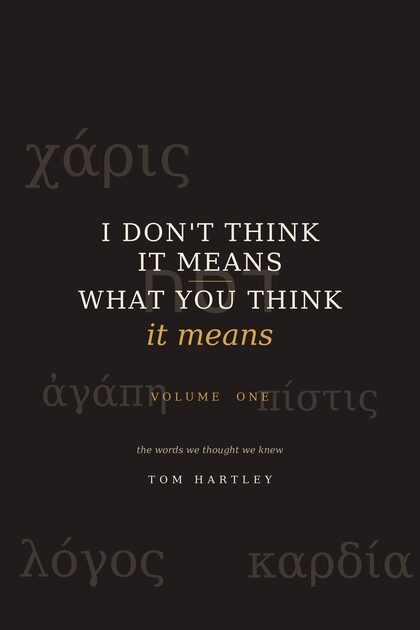
I Don’t Think It Means What You Think It Means
Volume One · The words we thought we knew
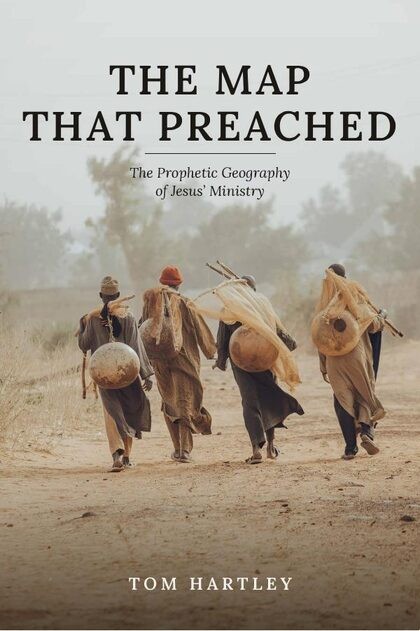
Ordering in New Zealand? Buy from the shop