The Same Fire
Zeal, Jealousy, and the Pot on God's Flame
"His disciples remembered that it was written, 'Zeal for your house will consume me.'"
— John 2:17 (ESV)
"Fire shall be kept burning on the altar continually; it shall not go out."
— Leviticus 6:13 (ESV)
Since settling here in New Zealand, something has been burning in me. It started as a small fire, and it has been growing ever since, and I am grateful for every bit of it. But I have walked with the Lord long enough to know that not every fire that burns in a man was lit from heaven. So, I have been sitting with one word, asking Him to show me the difference. That word is zeal.
The Word That Boils
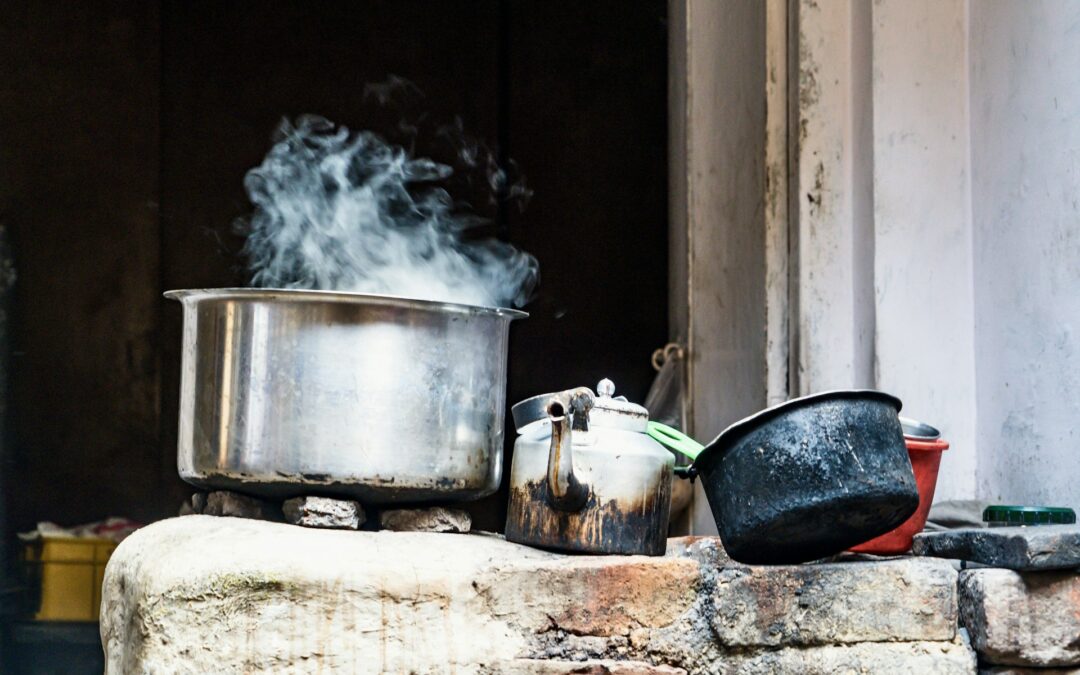
The Greek word is zēlos, and it comes from the verb zeō, which means TO BOIL. So put a pot of water on the stove and watch. The heat goes on, small bubbles gather on the bottom, and slowly it builds until the whole pot is rolling. That is zeal. Paul uses the root when he tells the Romans to be "fervent in spirit" (Romans 12:11), which, read literally, is BOILING in the Spirit. But the same word zēlos that our Bibles translate as "zeal" is just as often translated as "jealousy" or "envy." The Old Testament does the same thing. The Hebrew qin'ah means both zeal and jealousy, and the Lord Himself says His name is qanna, "the LORD, whose name is Jealous, is a jealous God" (Exodus 34:14). One word, one pot, two outcomes. And this is where those of us inside the church need to be careful. It is very easy to think that because we are Christians, our pot only ever holds the first kind, as if the world gets jealous while we get zealous. But James addressed his warning about bitter jealousy to "my brothers" (James 3:1), and Paul wrote this to a church full of gifted believers: "while there is jealousy and strife among you, are you not of the flesh and behaving only in a human way?" (1 Corinthians 3:3). Do you see this? The same pot sits on every Christian's stove.
The fire is the same. The difference is what it burns for.
Boiled and Ready for Use
Water at the boil is good for use. It makes the tea, cooks the meal, sterilises what needs to be made clean. Watch Jesus in the temple in John 2. He finds the court of the nations turned into a cattle yard and a money exchange, and He makes a whip of cords and drives it all out. The disciples remember Psalm 69:9, "Zeal for your house will consume me." The word for consume is katesthiō, to eat up, to devour completely. And it did. Psalm 69 is a passion psalm; a few verses later it says, "for my thirst they gave me sour wine to drink" (Psalm 69:21). The zeal that cleared the temple courts carried Jesus all the way to Golgotha. That is heaven's boil. It does not promote the pot; it pours it out. Paul knew this boil too. "I feel a divine jealousy for you," he tells the Corinthians, "since I betrothed you to one husband, to present you as a pure virgin to Christ" (2 Corinthians 11:2). He is jealous for them with the jealousy OF GOD, the protective fire of the friend of the bridegroom who wants the bride kept for her Husband. And the zeal that matters most is not even ours: "The zeal of the LORD of hosts will do this" (Isaiah 9:7). God's zeal guarantees God's promises. So let our zeal build. Scripture wants it to. Paul tells the church to "earnestly desire the higher gifts" (1 Corinthians 12:31), and the verb is zēloute, be zealous for them. Jesus gave Himself to purify "a people for his own possession who are zealous for good works" (Titus 2:14). Zeal for God and zeal for good works are meant to bubble up and roll. The question is never whether the pot should boil. It is what happens when it boils too hard.
Boiling Over
Leave that pot on the flame too long, turn the heat up too high, and it does not stay in the pot. It BOILS OVER. It spills across the stovetop, and whoever is standing closest gets burned. Boiling water does not leave a small mark. It leaves scars. Zeal works exactly the same way. The heat that makes us useful to the Lord, turned up past what He lit, will not stay in the pot, and the first one it burns is usually the one standing nearest, which is us. Solomon asked it plainly: "Can a man carry fire next to his chest and his clothes not be burned?" (Proverbs 6:27). Our hearts can burn. Our flesh can burn. Paul writes of those "whose consciences are seared" (1 Timothy 4:2), and the word is kaustēriazō, to brand with a hot iron, to cauterise. That is what boiled-over zeal does over time. It scars the heart until it can no longer feel.
And for Christians, the heat that most often tips the pot is not the world. It is watching what God is doing through someone else. Saul had his victory song until the women of Israel changed the words: "Saul has struck down his thousands, and David his ten thousands" (1 Samuel 18:7). Same army, same enemy, same God. And "Saul eyed David from that day on" (1 Samuel 18:9). Joseph's brothers were "jealous of him" (Genesis 37:11) over a dream that God gave, and when Stephen retells it he reaches for zēloō: "the patriarchs, jealous of Joseph, sold him into Egypt" (Acts 7:9). The Corinthians lined up behind their favourite preachers, one saying "I follow Paul" and another "I follow Apollos" (1 Corinthians 3:4), and Paul calls it flesh. Even Peter, freshly restored on the beach, turns and looks at John and asks, "Lord, what about this man?" And Jesus answers, "what is that to you? You follow me!" (John 21:21–22). Jehu belongs here too. God had genuinely commissioned him, yet he says, "Come with me, and see my zeal for the LORD" (2 Kings 10:16), and the verdict comes a few verses later: he "was not careful to walk in the law of the LORD ... with all his heart" (2 Kings 10:31). COME AND SEE MY ZEAL. Zeal that needs an audience is already measuring itself against someone else. This is why zēlos sits in the list of the works of the flesh in Galatians 5:20, written not to pagans but to churches, and why Paul follows it with "Let us not become conceited, provoking one another, envying one another" (Galatians 5:26). The danger is not out there. It is in the pew next to us, and in us.
Boiled water serves. Boiled-over water scars.
Minding the Heat
So how do you keep the pot from boiling over when God is plainly using someone else? Watch Moses. Two men, Eldad and Medad, start prophesying in the camp, and Joshua runs to stop them: "My lord Moses, stop them." Moses answers, "Are you jealous for my sake? Would that all the LORD's people were prophets, that the LORD would put his Spirit on them!" (Numbers 11:28–29). The Hebrew is qana. Joshua's zeal for his master was about to boil over into jealousy on his behalf, and Moses turned the heat down. Watch John the Baptist. His disciples come worried: "look, he is baptizing, and all are going to him." John's reply is the friend of the bridegroom again: "this joy of mine is now complete. He must increase, but I must decrease" (John 3:26–30). Watch Paul with the very man the Corinthians set up as his rival: "I planted, Apollos watered, but God gave the growth" (1 Corinthians 3:6). And then the instruction for the rest of us: "Rejoice with those who rejoice" (Romans 12:15), and "if one member is honored, all rejoice together" (1 Corinthians 12:26). Rejoicing over what God does through your brother or sister is how you turn the flame down before the water reaches the rim.
Two more men show us how to mind the heat. The first is Apollos himself. He was "fervent in spirit", zeōn, boiling, and "taught accurately the things concerning Jesus, though he knew only the baptism of John." Then Priscilla and Aquila "took him aside and explained to him the way of God more accurately" (Acts 18:25–26). A tentmaker and his wife pulled the great preacher aside, and the great preacher LET THEM. Zeal that can be corrected is zeal still on God's flame; Paul knew what the other kind looked like, "a zeal for God, but not according to knowledge" (Romans 10:2). The second is Elijah. Fresh off the fire falling on Carmel, he is under a broom tree asking to die, telling the Lord, "I have been very jealous for the LORD, the God of hosts" (1 Kings 19:10). He had left the pot on so long it had boiled dry. And the Lord's answer was not a rebuke. Sleep. Bread baked on hot stones. Water. More sleep. Then not the wind, not the earthquake, not the fire, but "the sound of a low whisper" (1 Kings 19:5–12). God took His prophet off the stove so he could boil again.
The Flame Under the Pot
Every pot depends on the flame beneath it, so go back to the tabernacle. The fire on the altar was to be kept burning and never go out (Leviticus 6:13). But where did it come from? "Fire came out from before the LORD and consumed the burnt offering" (Leviticus 9:24). God lit it. The priests only tended it. And in the very next verse, Nadab and Abihu offer "unauthorized fire before the LORD, which he had not commanded them" (Leviticus 10:1). Strange fire. Fire they lit themselves. It looked like worship. It smelled like incense. It was not from Him. So the questions I am asking of the pot in my own chest are simple ones. Who lit the flame under it? Is it serving, or spilling? Can it rejoice when God uses someone else? Can it be taught? Does it know how to rest? And for those who fear the opposite problem, a pot gone lukewarm, Jesus has a word to Laodicea: "Would that you were either cold or hot!" (Revelation 3:15). The word for hot is zestos, from the same root, boiling. His cure is not to crank up a flame of our own. It is "be zealous and repent" (Revelation 3:19). The way back to the boil is the way back to the altar.
Let me tell you, I do not want less fire. I want the RIGHT fire. Paul puts it in one line: "Do not be slothful in zeal, be fervent in spirit, serve the Lord" (Romans 12:11). The boiling is IN THE SPIRIT, and its end is SERVING THE LORD. Let it build. Let it roll. Keep the pot on His flame, and when He pours out someone else's, rejoice.
Heaven lights the fire. Our part is to keep the pot on it.
A Prayer
Father, thank You for the fire You have lit in me, and for the zeal of the Lord of hosts that will accomplish everything You have promised. Let my zeal for You and for good works build. Search me and show me where it has boiled over into jealousy, where I have watched what You are doing through a brother or sister and measured myself against it. Teach me to rejoice with those who rejoice, to say with John, He must increase. Heal the places where my heart has been burned and scarred. Make me teachable like Apollos, and when I am weary like Elijah, feed me, let me rest, and speak in the whisper. Keep the pot on Your flame, and let zeal for Your house consume me, and not my own name. Through Jesus Christ, whose zeal carried Him to the cross for me. Amen.
"If sinners be damned, at least let them leap to Hell over our bodies. If they will perish, let them perish with our arms about their knees."
– Charles Spurgeon
"Pride is essentially competitive — is competitive by its very nature."
– C.S. Lewis, Mere Christianity
i-CH always
The books

I Don’t Think It Means What You Think It Means
Volume One · The words we thought we knew