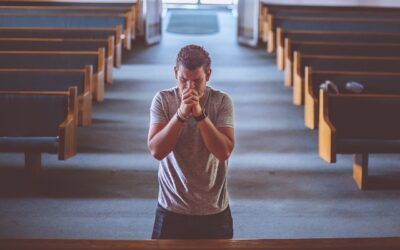
Where Else Would I Be?
“And he said unto them, How is it that ye sought me? wist ye not that I must be about my Father's business?”
— Luke 2:49 (KJV)
“But seek ye first the kingdom of God, and his righteousness; and all these things shall be added unto you.”
— Matthew 6:33 (KJV)
If you've ever lost a child in a supermarket, even for ninety seconds, you know the feeling. Your heart goes into your throat. Every aisle looks the same. You start bargaining with God before you've reached the frozen peas.
Mary and Joseph lost Jesus for three days.
They'd been to Jerusalem for the Passover, as they did every year. On the way home they assumed He was somewhere in the crowd of relatives. "But they, supposing him to have been in the company, went a day's journey; and they sought him among their kinsfolk and acquaintance" (Luke 2:44). A whole day before anyone noticed. Then a day back. Then searching.
"And it came to pass, that after three days they found him in the temple, sitting in the midst of the doctors, both hearing them, and asking them questions" (2:46).
Mary says what any mother would say. "Son, why hast thou thus dealt with us? behold, thy father and I have sought thee sorrowing" (2:48).
And Jesus answers with the first words of His we have. "How is it that ye sought me? wist ye not that I must be about my Father's business?"
Notice the gentle correction. Mary said, "thy father and I." Jesus says, "my Father." He isn't being rude to Joseph. He's telling them, quietly, who He belongs to.
Where Did You Think I'd Be?
There's something about that verse most of us were never told. In the Greek, there's no word for "business."
What Luke actually wrote is en tois tou patros mou. Word for word, "in the things of my Father." It's a short, open phrase, and Greek speakers used it for someone's house as well as for their affairs. That's why the King James says "about my Father's business," and most modern translations say "in my Father's house."
Which is right? I think Luke meant us to hear both.
Think about where they found Him. Not in the market. Not with the other boys. In the temple, the house of God. And His answer is almost puzzled: where else would I be? Of course I'm in my Father's house. Of course I'm busy with my Father's things.
Years later, standing in the same courts with a whip of cords in His hand, He'd say it again: "make not my Father's house an house of merchandise" (John 2:16). And on His last night with His friends: "In my Father's house are many mansions" (John 14:2). From twelve years old to the night before the cross, He never stopped calling it that.
He wasn't lost. He was home.
They had looked everywhere except the obvious place.
That changes how we read "my Father's business." It isn't first a job description. It's an address. You can't be about the Father's business without being at home in the Father's house.
The Word "Must"
There's another little word in that sentence worth slowing down for. "I must be."
The Greek is dei. It means it is necessary, it has to be. And Luke uses it again and again for the things in Jesus' life that were never optional. "I must preach the kingdom of God to other cities also: for therefore am I sent" (Luke 4:43). "The Son of man must suffer many things" (9:22). On the road to Emmaus, after it was all done: "Ought not Christ to have suffered these things, and to enter into his glory?" (24:26). Same verb.
So the "must" a twelve-year-old says in the temple is the same "must" that takes Him to the cross. The Father's business wasn't a hobby Jesus had. It was who He was.
Now look at what He did next, because it's easy to miss. "And he went down with them, and came to Nazareth, and was subject unto them" (2:51).
He'd just told them He must be about His Father's business. Then He went home and did as He was told for the next eighteen years. By the time He began His ministry, the whole town knew Him as "the carpenter" (Mark 6:3). Measuring, cutting, fixing things for the neighbours.
Was that the Father's business too? Luke thinks so. "And Jesus increased in wisdom and stature, and in favour with God and man" (2:52). The Father's business at twelve looked like listening in the temple. At twenty-five it looked like a workbench in a small town. Both were "must."
Living Here, From There
The night before He died, Jesus prayed for His disciples, and for us. "I pray not that thou shouldest take them out of the world, but that thou shouldest keep them from the evil. They are not of the world, even as I am not of the world" (John 17:15–16).
The little word "of" in that verse is ek. It means out of, from. Jesus isn't saying we don't live in the world. He's saying the world isn't where we're from.
I'm from New York, and I live in Havelock North. Ask me where I live and you'll get one answer. Ask me where I'm from and you'll get another. Both are true. One tells you my address, the other tells you something about me.
That's what Jesus is praying. Keep them in the world. Keep them at their desks and in their kitchens and on the road. But don't let them forget where they're from.
That's what it means to be about the Father's business as we walk through each day. We're in the shop, the office, the paddock, the hospital ward. And all the way through it, we belong to the Father's house.
Seek Ye First
So how do you do the Father's business on an ordinary Tuesday? Jesus gave us the answer on a hillside, and we usually quote it without the verses before it.
"Therefore take no thought, saying, What shall we eat? or, What shall we drink? or, Wherewithal shall we be clothed? (For after all these things do the Gentiles seek:) for your heavenly Father knoweth that ye have need of all these things. But seek ye first the kingdom of God, and his righteousness; and all these things shall be added unto you" (Matthew 6:31–33).
Read in its place, "seek ye first" isn't a command to add more religious things to an already full week. It's the answer to worry. Everybody is seeking something. Food, clothes, security, the mortgage paid. Jesus says the people who don't know God spend their lives chasing those. You have a Father who already knows you need them. So you can seek something else first.
And what is His kingdom? It's wherever He is King. Where what He wants is what happens. It's the same thing we pray for when we say, "Thy kingdom come. Thy will be done in earth, as it is in heaven" (6:10).
So the Father's business, day to day, is simple to say and hard to do. In each place you walk into, you ask: what does the King want here? In this meeting. In this conversation. In this argument with my teenager. At this checkout.
That's the order. Not God squeezed in around our business, but our business done inside His.
Not Busyness
There's a danger in all this, and I see it in myself. You can hear "be about your Father's business" and go home with a longer to-do list.
Luke has a story for that too. Jesus comes to the house of two sisters. Martha is in the kitchen, running the whole show. Mary "sat at Jesus' feet, and heard his word" (Luke 10:39).
"But Martha was cumbered about much serving." She comes to Jesus and asks Him to tell her sister to help. And He says, "Martha, Martha, thou art careful and troubled about many things: But one thing is needful: and Mary hath chosen that good part, which shall not be taken away from her" (10:40–42).
Martha wasn't doing anything wrong. She was serving Jesus. But she was so busy working for Him that she'd stopped being with Him.
Go back to the temple. What was the boy Jesus doing when they found Him? "Sitting in the midst of the doctors, both hearing them, and asking them questions." Sitting. Listening. Asking. That was what the Father's business looked like that day.
The Father's business is done by sons and daughters who live in the house,
not by staff who work for it.
Paul says it plainly. "Wherefore thou art no more a servant, but a son" (Galatians 4:7). Staff can be busy and still be outsiders. A son can be quiet at his father's feet and be completely at home.
And busyness has a way of turning into a record. Look how much I've done for God this week. That's self-righteousness again, with a calendar. The Father isn't impressed by how full our week is. He wants His children near Him.
Joining What He's Doing
So what does it actually look like? Jesus told us how He did it. "My Father worketh hitherto, and I work" (John 5:17). And then, "The Son can do nothing of himself, but what he seeth the Father do" (5:19).
That's the whole thing. Jesus watched what His Father was doing, and joined in.
Which means the Father's business isn't something we have to dream up. He's already at work. In the person at your work who's falling apart and hiding it. In the neighbour you keep meaning to talk to. In your own home, at the end of a long day. Our part is to notice, and to join Him.
And it reaches into the ordinary work too. "And whatsoever ye do, do it heartily, as to the Lord, and not unto men" (Colossians 3:23). Jesus spent more years at a carpenter's bench than He did preaching. The sanding counted.
For This Week
Write it down in the morning. Before the day starts, write one line: "Father, what are You doing today, and where?" Write down one place you'll be, work, home, the shops. At the end of the day, look back. Where did His business show up in an ordinary hour? What did you do when it did?
Sit before you serve. Before you start on the list one day this week, give the Lord ten minutes doing nothing but listening. Read Luke 2:41–52, then just be quiet in His house.
Check the order. Look at one decision this week, about money, time or a conversation, and ask plainly, "Am I seeking His kingdom first here, or mine?"
Going Deeper
For a group, or on your own with a notebook, take these slowly.
- Mary and Joseph went a whole day before they noticed Jesus wasn't with them (Luke 2:44). How might we go a day, or longer, without noticing He isn't with us?
- "In the things of my Father" can mean His house or His business. Why do you think the two belong together?
- Jesus said "must" in the temple, then went home and was subject to His parents for eighteen years (2:51). What does that tell you about where the Father's business is done?
- Read Matthew 6:25–34 in one go. How does reading "seek ye first" as an answer to worry change the way you hear it?
- Are you more of a Martha or a Mary right now? What would "that good part" look like in your week?
- Jesus did what He saw the Father doing (John 5:19). Where might the Father already be at work around you that you haven't noticed?
A Prayer
Father, You are my Father, and Your house is my home. Forgive me for the days I've gone on without noticing You weren't with me. Forgive me for being busy for You and far from You. Teach me to sit at Your feet before I run to the next thing. Give me eyes to see what You're already doing, at work, at home, on the road, and the heart to join You there. Keep me in the world, but never let me forget where I'm from. I want to seek Your kingdom first. In Jesus' name, amen.
"It was a spirit of undivided consecration to the will of God his Father."
– C. H. Spurgeon, Christ About His Father's Business (Sermon 122, 1857)
"The man who has God for his treasure has all things in One."
– A. W. Tozer, The Pursuit of God
i-CH always
Next time: forty verses earlier. Mary's firstborn was carried into the temple as a baby, and the law of the firstborn tells us why He stayed.
Read the others
The Firstborn Who Stayed
By a Fire of Coals
The Door Back In
Loose Him, and Let Him Go
The Man Who Went First
The books

I Don't Think It Means What You Think It Means
Volume One · The words we thought we knew
Ordering in New Zealand? Buy from the shop
Keep Reading