Joy in the Wilderness
Part 6
“Though the fig tree should not blossom, nor fruit be on the vines, the produce of the olive fail and the fields yield no food, the flock be cut off from the fold and there be no herd in the stalls, yet I will rejoice in the Lord; I will take joy in the God of my salvation.” Habakkuk 3:17–18
“Count it all joy, my brothers, when you meet trials of various kinds, for you know that the testing of your faith produces steadfastness.” James 1:2–3
Read those two passages again before you go any further. I mean it. Read them slowly. Because what those men are saying is one of the most counterintuitive things in all of Scripture. They are saying that joy does not require good circumstances. They are saying that joy survives the wilderness. In fact they are saying something even more radical than that – they are saying that joy THRIVES in the wilderness. That the wilderness is where joy proves it is real.
Habakkuk’s Situation Was Not a Metaphor
I want you to understand what Habakkuk is actually describing because we read these verses on a nice screen with a cup of tea in our hand and we think it sounds poetic. It was not poetic. This man is saying that the fig tree has failed. The vines are empty. The olive crop – the one thing they depended on for oil, for cooking, for everything – has produced nothing. The fields are barren. The sheep are gone and there is no cattle. In an agrarian society that is not a bad season. That is TOTAL economic collapse. That is starvation. That is ruin. There is nothing left. And Habakkuk looks at all of that and says YET. Yet I will rejoice in the Lord. Yet I will JOY in the God of my salvation. That word “yet” might be one of the most powerful words in the Bible. It is the hinge between despair and worship. It is the point where the flesh says “this is over” and the spirit says “no it is not.” Everything in the natural says give up and Habakkuk’s spirit says I WILL REJOICE. Not I might. Not I hope to. I WILL.
How? How does a man standing in the ruins of everything he depended on find joy? Because his joy was never IN those things. His joy was in the God of his salvation. And God had not moved. God had not failed. God had not left. The fig tree was gone but God was still there. And that was enough.
James Was Not Being Cruel
Now let us look at James because his instruction trips people up. “Count it all joy when ye fall into divers temptations.” The word temptations here is the Greek word peirasmos which means trials, tests, or proving. He is not talking about being tempted to eat a second piece of cake. He is talking about the hard things – the trials that test what you are made of. And he says COUNT it joy. That word “count” is the Greek word hegeomai which means to consider, to reckon, to make a deliberate assessment. James is saying DECIDE that it is joy. Make a choice. Do not wait until you FEEL joyful – you may never feel it. Reckon it. The same way Abraham reckoned his faith as righteousness (Romans 4:3) – he decided to believe what God said even when everything in the natural contradicted it.
And why does James say to do this? “Knowing this, that the trying of your faith worketh patience.” The trying of your faith WORKETH. It is actively producing something. Patience, endurance, staying power. The wilderness is not punishment. It is a WORKOUT. God is not trying to break you. He is building something in you that can only be built under pressure. You cannot develop endurance sitting on the sofa. You cannot develop faith when everything is going well. The wilderness is God’s gym and joy is what keeps you from walking out.
Jesus in the Wilderness
I want to show you something about Jesus that I think changes how we look at this. After His baptism in the Jordan – after the heavens opened and the Father said “This is my beloved Son in whom I am well pleased” (Matthew 3:17) – the very next thing that happens is the Spirit DRIVES him into the wilderness (Mark 1:12). Not leads. Drives. The Greek is ekballo – the same word used for casting out demons. The Spirit forcefully sends the Son of God into forty days of fasting and temptation in the desert. Right after the greatest spiritual high of His life up to that point.
Do you see what this means? The wilderness was not an accident. It was not a detour. It was the PLAN. The Spirit of God took Jesus directly from the blessing to the proving ground. And if that was the path for the Son of God what makes us think our path would be different?
Now here is the part that most people miss. Jesus came out of the wilderness “in the power of the Spirit” (Luke 4:14). He went in blessed. He came out POWERFUL. The wilderness did not diminish him – it equipped him. Everything he would do from that point forward – every healing, every miracle, every deliverance – came after the wilderness. Not before it. The wilderness was not an obstacle to His ministry. It was the DOORWAY.
And I believe the same is true for you. Whatever wilderness you are in right now it is not the end of your story. It is the doorway to what comes next. But you have to go THROUGH it. Not around it. Not over it. Through it. And joy is what carries you.
Paul and Silas Understood This
I referenced Paul and Silas briefly in an earlier post but I want to come back to it here because the details matter. Acts 16:22–26 tells us they were stripped, beaten with rods (not a light punishment – Roman rods could break bones), thrown into the inner prison (the worst cell, the darkest, the coldest), and their feet were fastened in stocks. This is not a bad day at work. This is brutality followed by isolation followed by immobility. Every single natural circumstance screamed “you are finished.”
And at midnight – MIDNIGHT, not the next morning when things might look a bit more hopeful – Paul and Silas prayed and SANG HYMNS unto God. And the other prisoners heard them. Let that land. The people around them in that dark place HEARD their joy. And then the foundations of the prison shook. The doors opened. The chains fell off. Not just theirs – everyone’s.
Do you see what happened? Their joy in the wilderness did not just set THEM free. It set everyone around them free. The jailer fell on his knees and said “What must I do to be saved?” (Acts 16:30). That man did not ask that question because of a theological argument. He asked because he saw two beaten, bleeding men singing with a joy that defied every circumstance – and he wanted whatever they had.
How cool is that?! Their wilderness became someone else’s salvation.
Your Wilderness Is Not Wasted
Let me tell you something I have learned the hard way. The wilderness is never wasted. Not one day of it. Not one tear. Not one sleepless night. God does not waste pain. He REDEEMS it. Romans 8:28 says “And we know that all things work together for good to them that love God, to them who are the called according to his purpose.” ALL things. Not some things. Not the nice things. ALL of them. The bankruptcy. The betrayal. The diagnosis. The loss. The season where you prayed and heard nothing and wondered if God had forgotten your address. All of it is working. All of it is building something. And joy is the evidence that you believe that even when you cannot see it.
I have been in wildernesses that I thought would never end. Seasons where the fig tree was not blossoming and the fields were bare and there was nothing in the stalls. And I can tell you from personal experience that Habakkuk was right. When everything else is stripped away and all you have left is God you discover that God is all you ever needed. And THAT discovery – that He is enough – is where the deepest joy lives. Not on the mountaintop. In the valley.
The mountaintop is where you celebrate what God did. The valley is where you discover who God IS.
Joy Is the Evidence
Here is what I want to leave you with. Joy in the wilderness is not denial. It is not pretending that everything is fine when it is not. It is not slapping a smile on your face and quoting verses while your world falls apart. Joy in the wilderness is a DECLARATION. It is your spirit standing up in the ruins and saying “The God of my salvation has not changed. He has not left. He has not failed. And because HE is still standing I am still standing.” That is what Habakkuk did. That is what James instructed. That is what Paul and Silas demonstrated at midnight in a Roman prison.
And here is the thing about that kind of joy – the world cannot explain it. When you have every reason to be crushed and you are joyful instead, people notice. They cannot help it. It does not make sense to them. And that is exactly the point. Joy in the wilderness is one of the most powerful testimonies a Christian can carry. It says more about the reality of God than a thousand sermons ever could.
So if you are in the wilderness right now – and some of you are, I know it – hear me. You are not forgotten. You are not abandoned. You are not being punished. You are being PREPARED. And the joy of the Lord is available to you right where you are. Not after the wilderness. Not when things get better. NOW. In the middle of it. In the darkest cell at midnight.
Count it joy. Reckon it. Decide it. And then open your mouth and sing. You may be surprised at what shakes loose.
A Prayer
Father, I am in a hard place and You know it. I will not pretend otherwise. But I choose today to count it joy. Not because I understand what You are doing but because I trust who You are. You have not left me. You have not forgotten me. And this wilderness is not my grave – it is my proving ground. Give me the strength to sing at midnight. Give me the courage to worship when everything says I should weep. And let my joy in this season be a testimony to everyone around me that You are real and You are enough. In Jesus’ name, Amen.
— — —
“If you want anything from God you will have to pray into heaven. That is where it all is.”
– Smith Wigglesworth
“God does not give us overcoming life; He gives us life as we overcome.”
– Oswald Chambers
Always i-CH
The books
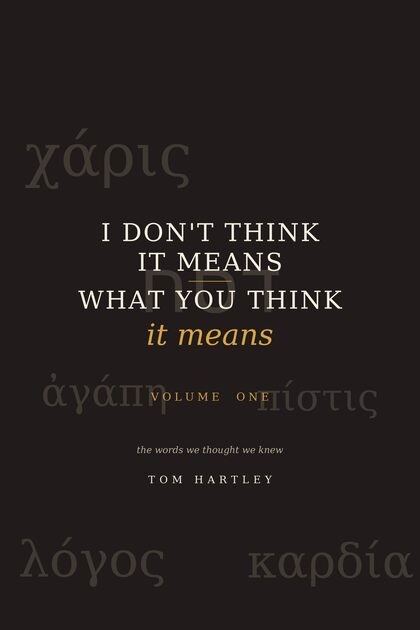
I Don’t Think It Means What You Think It Means
Volume One · The words we thought we knew