
Part 2: The Watergate
“For the law was given through Moses, but grace and truth came by Jesus Christ.” John 1:17
“For our sake he made him to be sin who knew no sin, so that in him we might become the righteousness of God.” 2 Corinthians 5:21
Beautiful Tombs
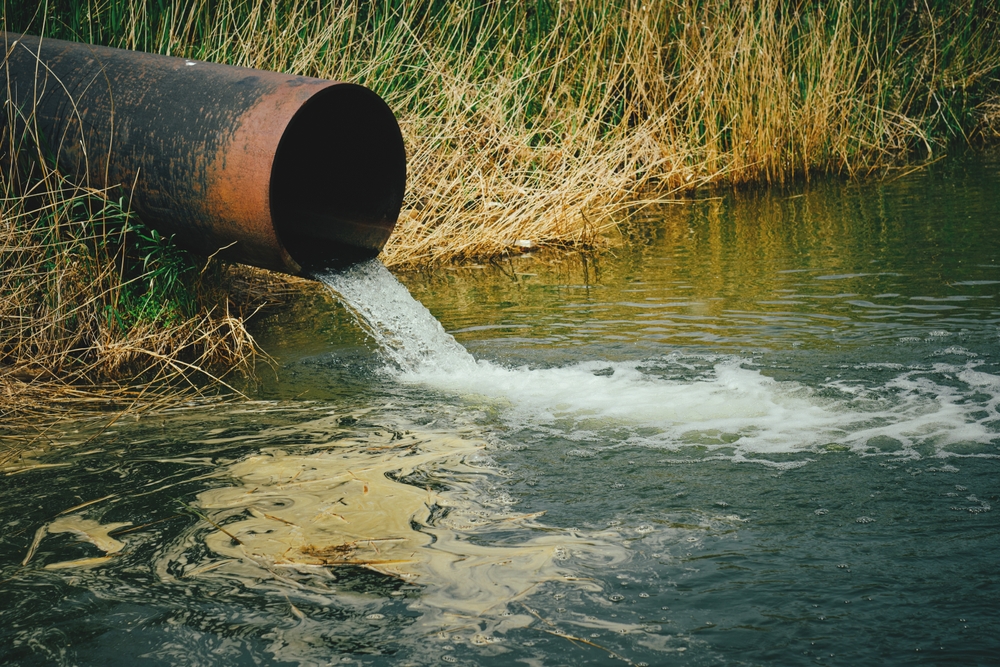
By the time Jesus showed up, the river was a MESS. Not God’s river. That one still ran clear and true, the way it always had. But the OTHER one — the one fed by self-righteousness — had swallowed up the very people who were supposed to be guarding God’s truth.
The Pharisees. The Sadducees. The scribes. The teachers of the Law. These were the religious leaders of Israel. They knew the Old Testament inside and out. They could quote Moses from memory. They tithed down to the herbs in their garden. Let me tell you, these guys measured out a TENTH of their mint leaves. You have to be pretty committed to religion to tithe your spice rack. That’s not devotion — that’s an accounting problem.
And Jesus looked at them and said something that should have shaken them: “Woe to you, scribes and Pharisees, hypocrites! For you are like whitewashed tombs, which outwardly appear beautiful, but within are full of dead men’s bones” (Matthew 23:27). Beautiful on the outside. DEAD on the inside. That’s what self-righteousness does when it puts on religious clothes. It looks the part. It sounds the part. It can quote chapter and verse all day long. But there’s no LIFE in it. Because it’s drinking from the wrong river.
Heavy Burdens
These men had taken the Law that God gave through Moses — the Law that was meant to be a LEVEE holding the river straight until love could take over — and turned it into a religion. A performance. A checklist. A way to measure who was in and who was out. They stacked rule on top of rule, building the levee HIGHER than God ever intended, until the burden was crushing. And then they stood back and JUDGED everyone who couldn’t carry it. “They tie up heavy burdens, hard to bear, and lay them on people’s shoulders, but they themselves are not willing to move them with their finger” (Matthew 23:4). Does that sound like “my yoke is easy and my burden is light”? Not even CLOSE.
They had Moses’ words, but they’d lost Moses’ HEART. Remember what Moses told Israel as his final charge? “Love the Lord your God with all your heart and with all your soul and with all your might.” That was the WHOLE POINT of the Law. Love God. Walk with Him. Let His righteousness be your covering. But self-righteousness doesn’t want to love God. It wants to BE God. It wants to sit in the judge’s seat. And that’s exactly where the religious leaders had planted themselves. Smith Wigglesworth once said, “God does not call the qualified; He qualifies the called.” The Pharisees had it completely backwards — they thought their qualifications made them called. They were SO wrong.
A Baby in a Feeding Trough
So into this world, at EXACTLY the right time, God did something He’d been planning since the garden. He sent His Son. Not as a king on a throne. Not as a scholar in a temple. As a BABY in a feeding trough, born to a carpenter’s family, raised in a nowhere town called Nazareth. God’s righteousness showed up in the simplest, humblest package imaginable. The Creator of the universe could have arrived with a marching band and a sky full of fireworks, but instead He chose a stable that smelled like livestock. That tells you everything you need to know about the difference between God’s way and man’s way.
And from the moment Jesus began His ministry, He made one thing absolutely clear — God’s righteousness and man’s self-righteousness are NOT the same river. Not even close. “Unless your righteousness exceeds that of the scribes and Pharisees, you will never enter the kingdom of heaven” (Matthew 5:20). Now THINK about that. These Pharisees were the most religiously disciplined people alive. They fasted twice a week. They prayed at every appointed hour. They followed HUNDREDS of rules. And Jesus says your righteousness has to EXCEED theirs? How? How could a fisherman or a tax collector or a woman drawing water at a well ever out-righteous a Pharisee? By drinking from a DIFFERENT RIVER ENTIRELY.
Living Water
Jesus wasn’t asking people to try harder. He was asking them to START OVER. To stop drinking from the polluted water of “I’ll do it myself” and come to the source of living water. He sat down with a Samaritan woman — someone the religious leaders wouldn’t have been caught DEAD talking to — and told her, “Everyone who drinks of this water will be thirsty again, but whoever drinks of the water that I will give him will never be thirsty again. The water that I will give him will become in him a spring of water welling up to eternal life” (John 4:13-14). THAT’S the river. Right there. Not a river you earn your way into. A river that He GIVES you. And once it’s in you, it doesn’t run dry. It wells up. It overflows. It becomes a SPRING.
Rubbish
This is what the Apostle Paul came to understand so deeply after he met Jesus on the road to Damascus. Paul had been a Pharisee HIMSELF — one of the best. He had the credentials, the training, the zeal. If anyone could have earned righteousness by effort, it was Paul. But listen to what he said after he encountered Jesus: “Whatever gain I had, I counted as loss for the sake of Christ. Indeed, I count everything as loss because of the surpassing worth of knowing Christ Jesus my Lord… not having a righteousness of my own that comes from the law, but that which comes through faith in Christ, the righteousness from God that depends on faith” (Philippians 3:7-9).
Paul threw it ALL away. Every credential. Every achievement. Every gold star on his religious report card. He called it rubbish. Actually, let me tell you — the Greek word Paul used there is a LOT stronger than rubbish. Your Bible is being polite. Paul was NOT. Because he’d finally tasted the real thing, and everything else was polluted water by comparison. There are two kinds of righteousness, and Paul saw them as clearly as anyone who ever lived. There’s the righteousness you build yourself — brick by brick, rule by rule, performance by performance. And there’s the righteousness God gives you through Jesus Christ. One is dead weight. The other is LIVING WATER.
The Gate
And this is what makes Jesus so different from every prophet who came before Him. Moses delivered the Law. The prophets delivered warnings and promises. But Jesus didn’t just deliver a MESSAGE. He IS the message. “For the law was given through Moses, but grace and truth came by Jesus Christ” (John 1:17). Grace and truth didn’t come THROUGH Jesus like a courier dropping off a parcel. They came IN Him. He IS the grace of God. He IS the truth of God. He IS the door to God. He said so Himself: “I am the way, and the truth, and the life. No one comes to the Father except through me” (John 14:6).
If the river of God’s righteousness has been flowing since Eden — and it has — then Jesus is the gate through which it pours into the world for EVERYONE. Not just for Israel. Not just for the religious. For EVERYONE. He is the watergate. He lived the life of perfect devotion to the Father that Adam never finished. He walked in God’s righteousness the way we were always meant to. And then He went to a cross — not because HE’D drunk from the wrong river, but because WE had. “For our sake he made him to be sin who knew no sin, so that in him we might become the righteousness of God” (2 Corinthians 5:21). Read that again. SLOWLY. In Jesus, you BECOME the righteousness of God. Not your own righteousness. Not a cleaned-up version of self-righteousness. GOD’S righteousness. The same kind of clothes Adam and Eve wore in the garden before they ever reached for the wrong fruit.
The Spirit
And when Jesus rose from the dead and ascended to the Father, He didn’t leave us alone. He sent His Holy Spirit — the same Spirit that hovered over the waters at creation — to walk with us, guide us, and lead us in all truth. “When the Spirit of truth comes, he will guide you into all the truth” (John 16:13). The Spirit keeps us in the river. He’s the current beneath our feet when we don’t know which way to go. He’s the voice that says, “This is the way, walk in it” (Isaiah 30:21). Let me tell you, if you’ve ever had the Holy Spirit nudge you away from a bad decision, you know EXACTLY what that voice sounds like. It’s the most gentle, most persistent, most annoyingly accurate voice you’ll ever hear.
Seek First
So here’s where it gets personal. And here’s where it gets simple. Jesus stood before a crowd of people who were worried about food, about clothes, about tomorrow. Regular people with regular problems. And He said: “Seek first the kingdom of God and HIS righteousness, and all these things will be added to you” (Matthew 6:33). Seek FIRST. Not seek when it’s convenient. Not seek after you’ve figured everything else out. FIRST. Before the bills and the stress and the noise of this world. Seek His kingdom. Seek His righteousness. And watch what He does with the rest.
That’s the invitation. Same as it was in the garden. Same as it was at the well in Samaria. Same as it is right now, wherever you’re sitting as you read this. Come to Jesus. Drink from the right river. And let His righteousness — not yours, HIS — carry you home.
* * *
A Moment Before You Go
Lord, I’m done trying to out-righteous the Pharisees. I’m done building something with my own hands that You’ve already built with Yours. I want the living water. I want the real river. Pour it through me. In Jesus’ name, amen.
* * *
A.W. Tozer wrote, “The man who has God for his treasure has all things in one.” Everything the Pharisees were scrambling to collect, Jesus was offering for free. The treasure isn’t the rules. The treasure is HIM.
Dietrich Bonhoeffer said, “Cheap grace is grace without discipleship, grace without the cross.” The grace Jesus brought cost Him everything. Don’t cheapen it by treating it like a participation trophy.
* * *
Next: The Power of Righteousness — Part 3: The Narrow River
i-CH
Always